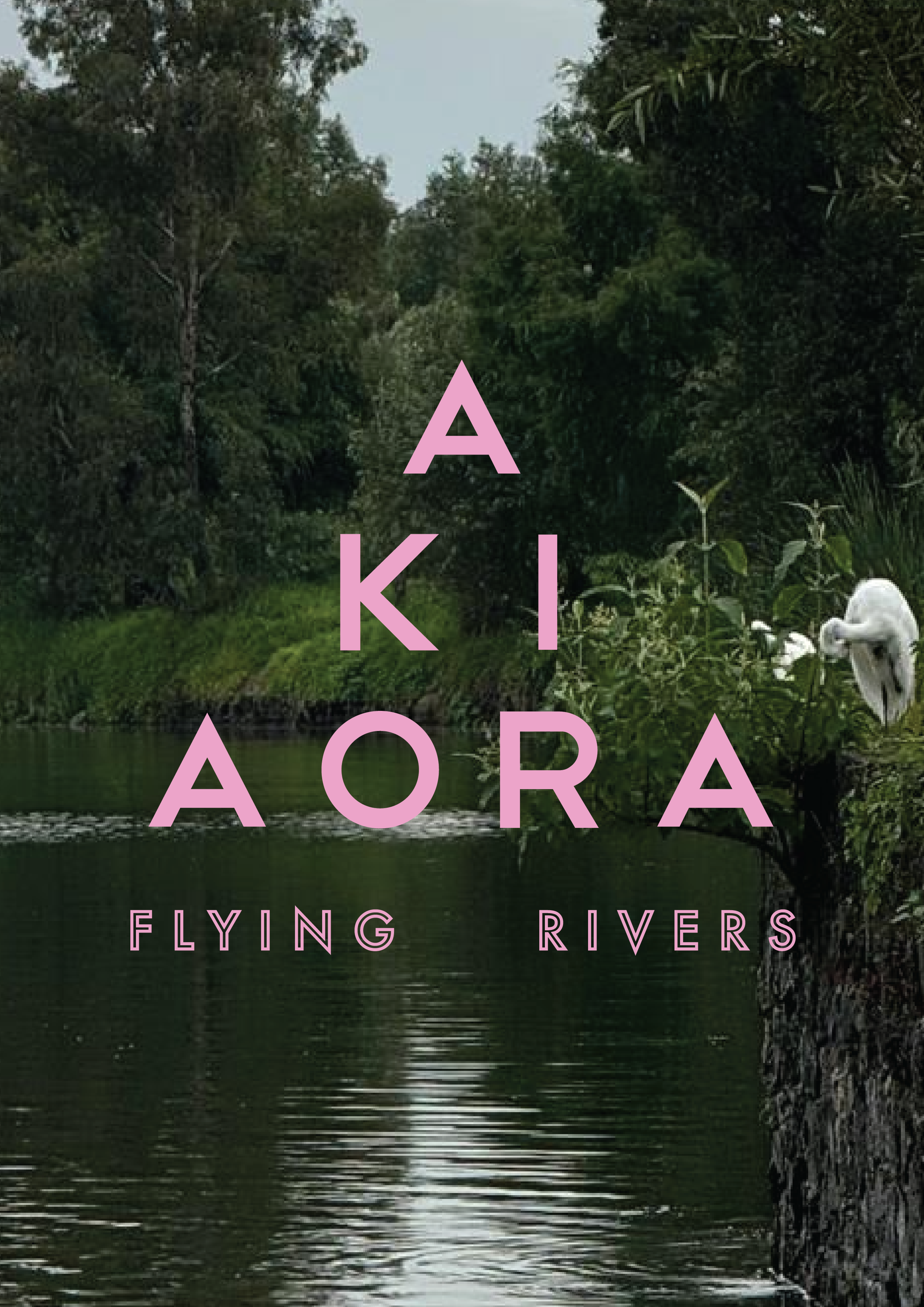
AKI AORA is an annual residency and contemporary art program that convenes Mexican and international artists to create new works, performances, interventions, and situated research grounded in the social, ecological, and cultural landscapes of Mexico.
AKI AORA emerged in 2016 in response to the planetary existential doubt brought on by global warming, international political instability, and the failure of collective imagination to develop novel solutions to humanity’s tumultuous dilemmas.
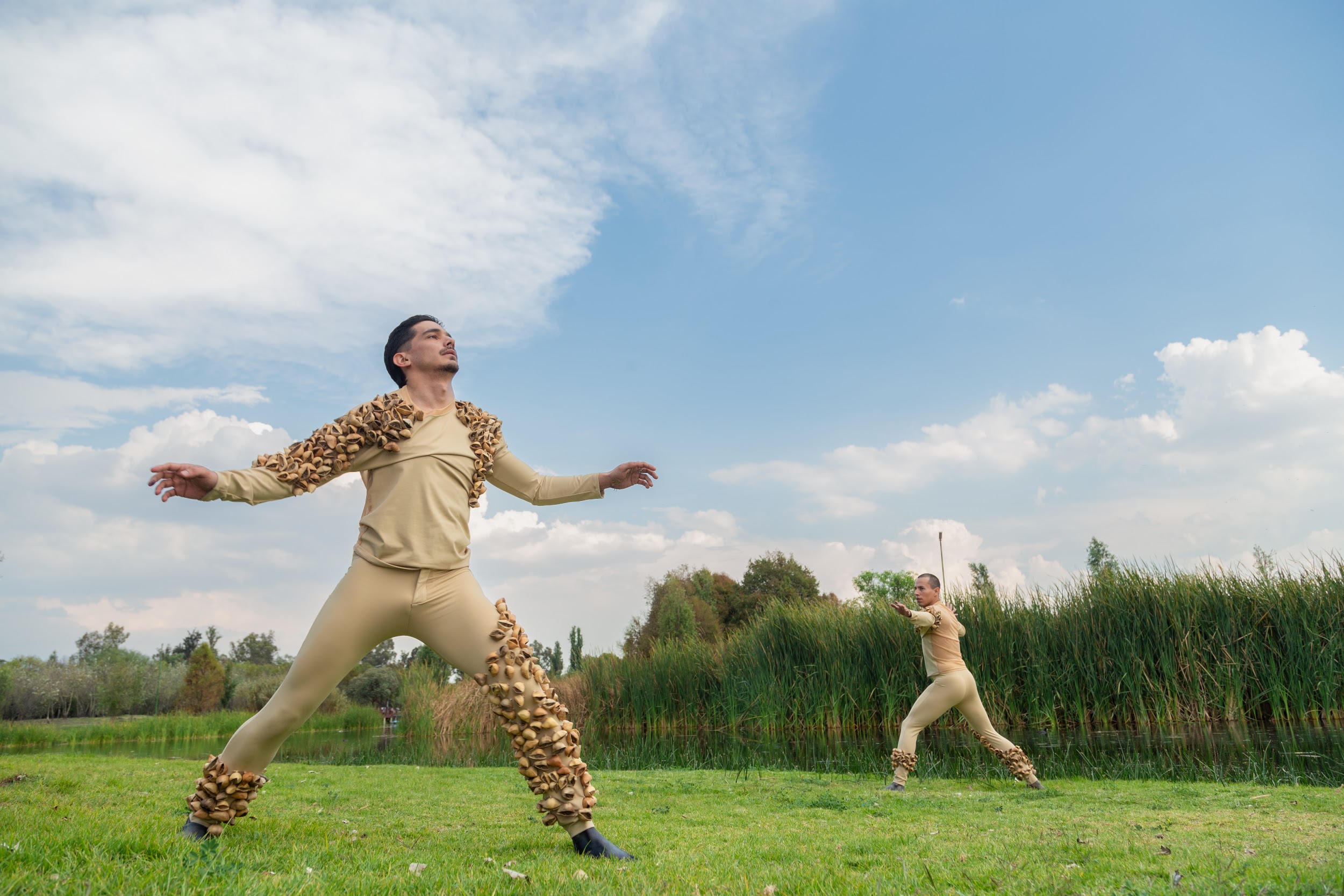
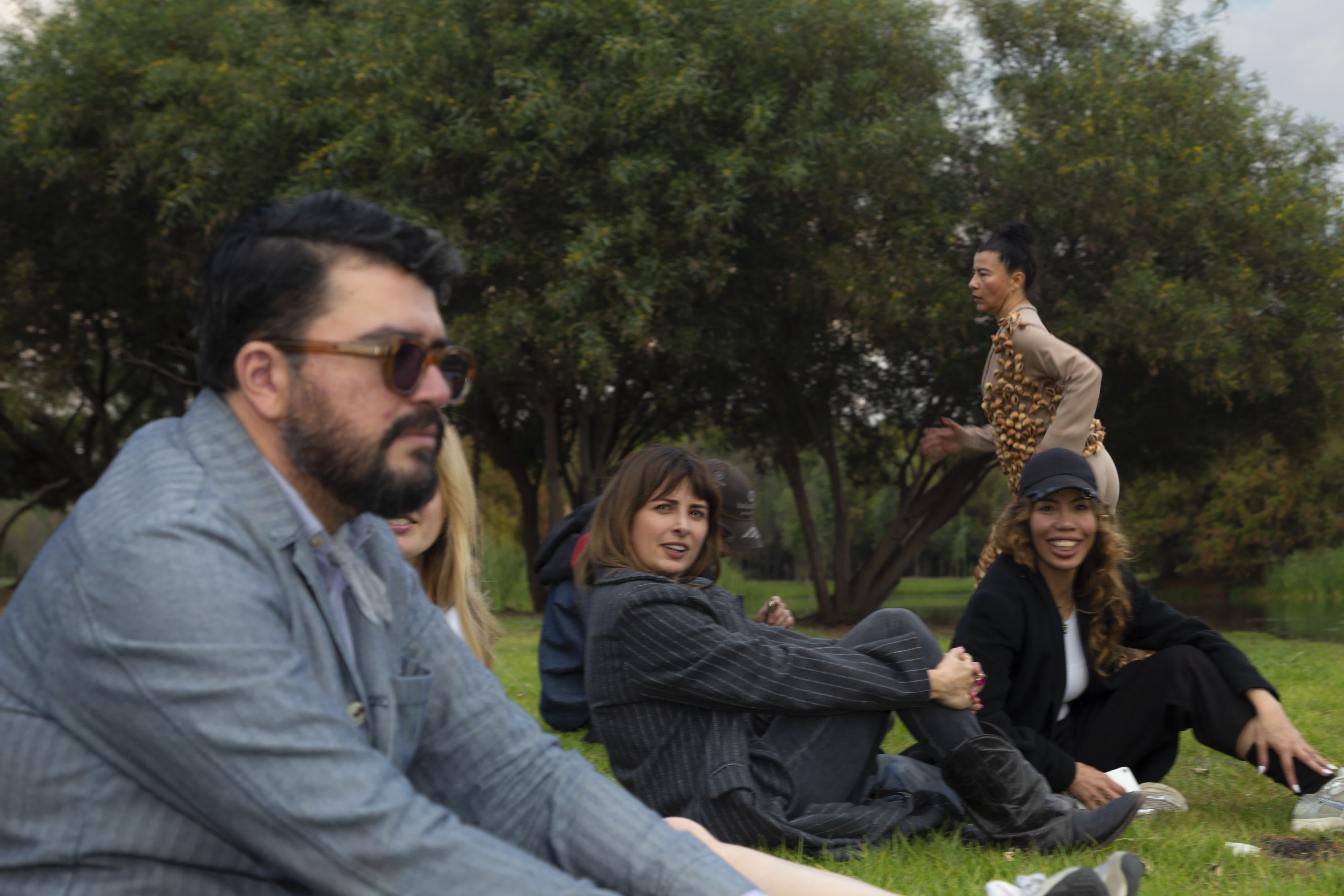
In Seeds, Martha Hincapié Charry activated the landscape of Xochimilco through movement, rhythm, and resonance. Her performative installation used seed-laden garments to compose a sonic choreography that mirrors the invisible flows of water. Rooted in ancestral listening and the politics of territory, her gestures — together with performers Luis Beto Ortega and Ernesto Peart Falcón — remind us that the body is both archive and conduit, carrying memory, fertility, and resistance. The performance, created in collaboration with local artisans and ecologists, resituates dance as a ritual of reconnection with the ecosystem.
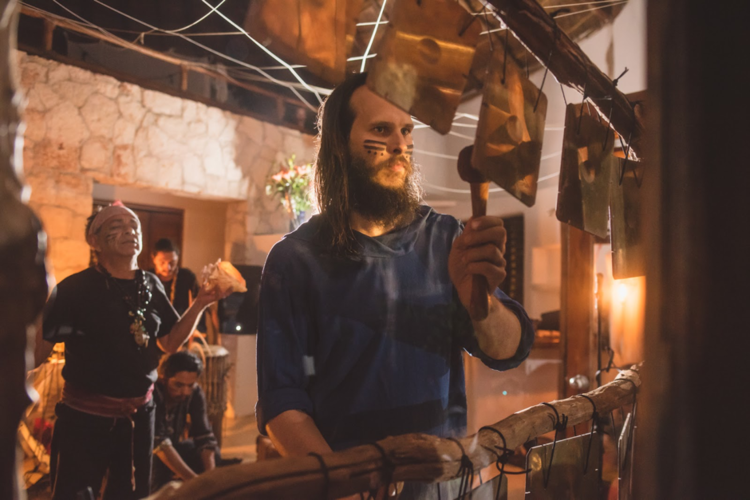
Hendrik Weber aka Pantha du Prince made a research during his residency time and established various collaborative processes which resulted in a row of workshops and performances taking place during the residency and the public program in Tulum, Mexico. Redeveloping his living space into a music studio and working on a long term project The Conference of the Trees during his research Hendrik was initially interested in the different kinds of wood which are used for the Mayan instruments. With maestro Jose, a wisdom keeper of the Mayan rituals and a specialist of the prehispanic music instruments Hendrik worked on the wood block percussion, Tun Kul which he carved under the supervision of the maestro. Together with the Tulum based organisation La Esquina, who works with the local children from Tulum, Weber and Maestro Jose organised a special workshop, where children were given lessons in producing and playing different percussion instruments. For the AKI AORA Public Program 2018 Hendrik developed an installation and a special performance Orchestra of forgotten Skills. The choreography of the sounds was initially inspired by the colors used by Mayans to define the four directions of the world: the red for the East, the black for the West, the yellow for the South and the white for the North, which represents the Sun Circle with the blue color in the middle, which is the fusion of all the directions.

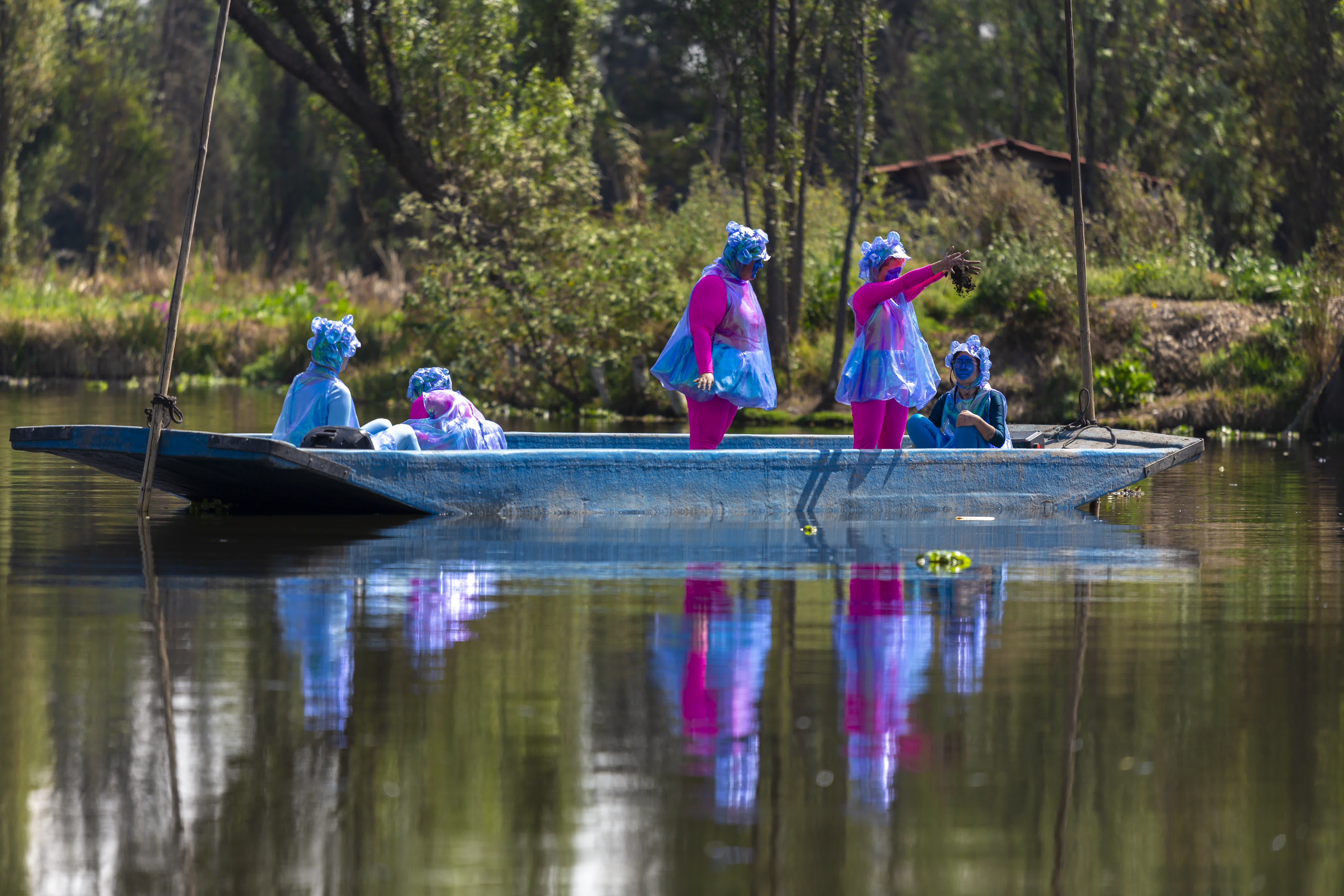
Staged on a chinampa as a compost ritual. Through performance and collective presence, the group transformed the waters into aspeculative site of queer ecologies, care labor, and radicaltenderness. Their intervention proposed composting as a metaphor forboth decay and renewal—emotional, political, and planetary.
Aki Aora emerged in 2016 in response to the planetary existential doubt brought on by global warming, international political instability, and the failure of collective imagination to develop novel solutions to humanity’s tumultuous dilemmas.
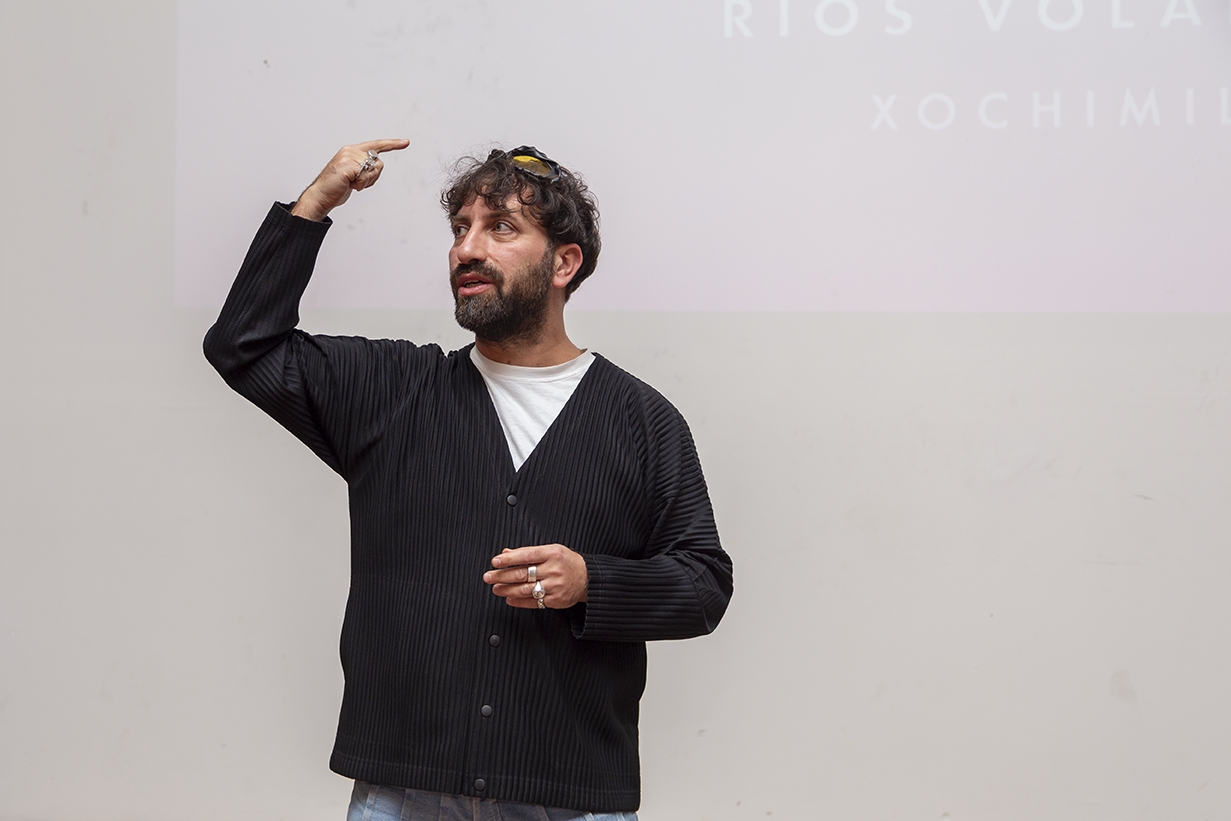
Ahmet Öğüt’s film The Missing T, produced during the AKI AORA 2018 residency, was revisited for Ríos Voladores 2025. This work investigates collective memory within the cultural landscape. Shown within the chinampa context, the film reactivated questions around actions and guerrilla tactics of resistance, bridging past and present iterations of the residency.
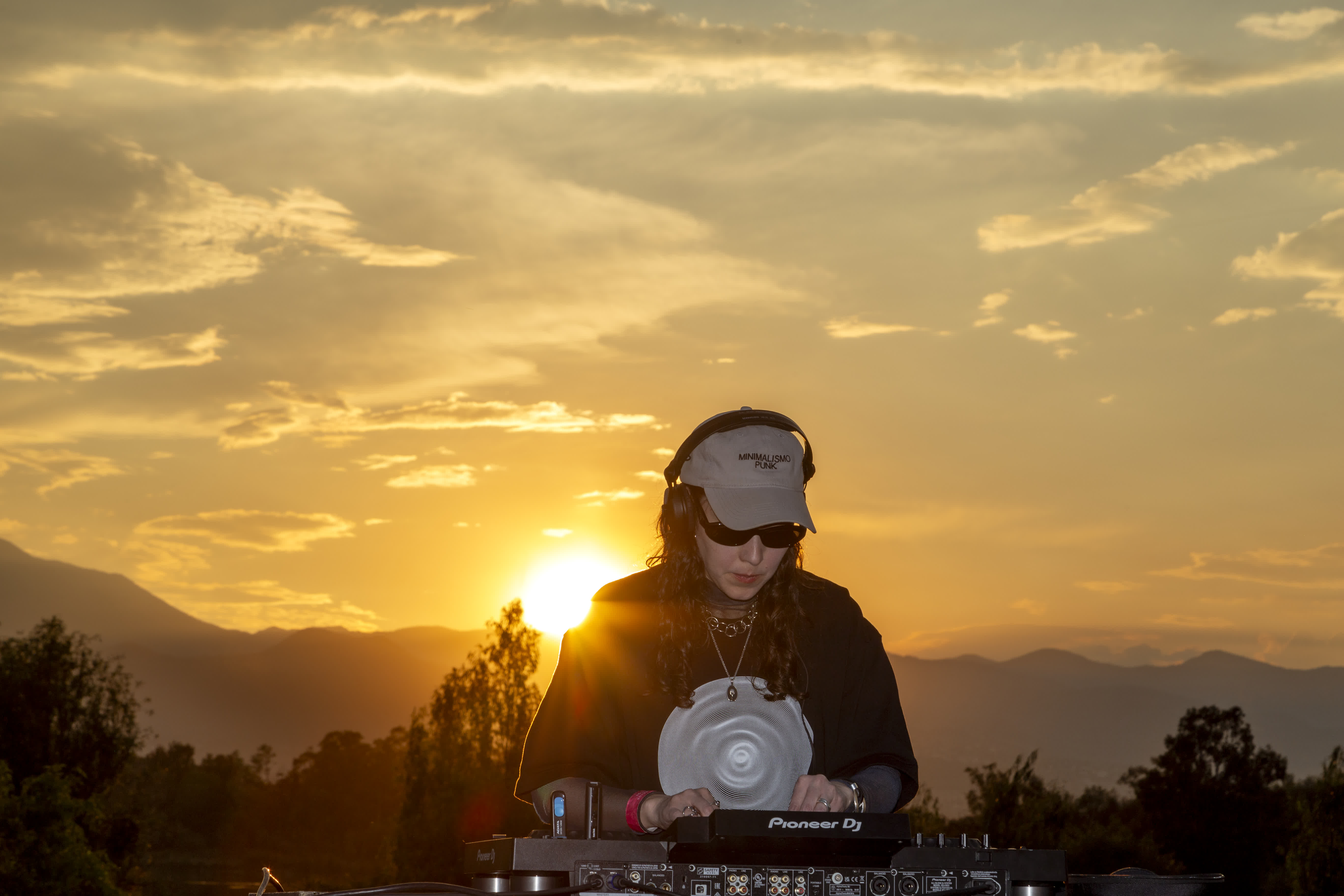
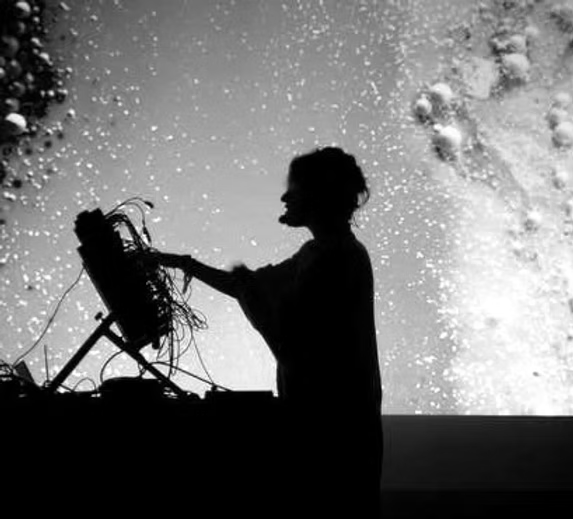
In a sunset performance on the rooftop of Museo Chinampaxochitl, artist and researcher Leslie García invited the audience to attuneto the metabolic rhythms of non-human life. Using bio-sonification instruments and analog synthesis, García transformed the electrical signals of local organisms into a live ambient soundscape. Her sonic meditation echoed the atmospheric nature of flying rivers—elusive yet essential—offering a moment of deep ecological listening as the sun disappeared into the wetlands.
.avif)
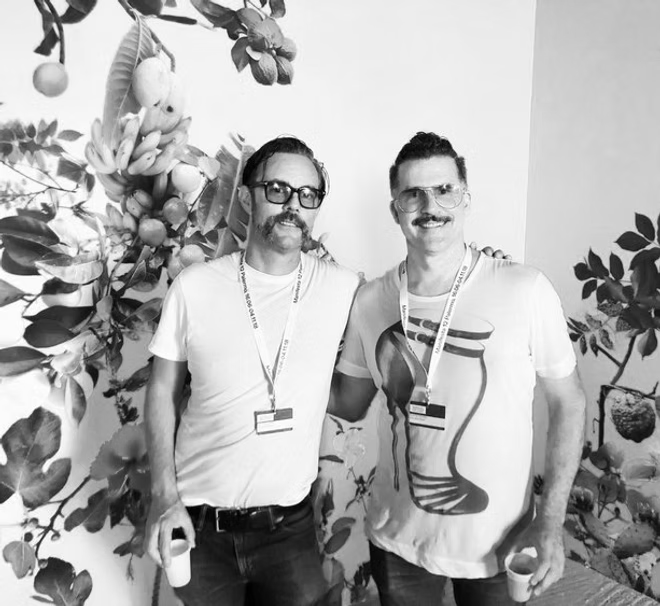
Fallen Fruit’s first initiative was to map all the fruit trees growing within the public right of way land in a neighborhood of Los Angeles. Over the years, the collaboration has grown to include serialized public art projects, site-specific installations and public happenings in cities throughout the world. Working with photography, video, recontextualized objects, cartography, and wallpaper patterns, the artists use fruit and/or public spaces as a material or artistic means; their practice aspires to invoke new systems of understanding the ways we interact with public space and the natural world, especially in developed urban areas, such as how culture impacts a place and becomes “everyday life.” David and Austin’s projects invite people to experience their city as a fruitful, generous place, to collectively re-imagine the nuances of public participation and urban space, to ponder forms of located citizenship, and to explore the meaning of community and neighborhood through creating and sharing available resources.
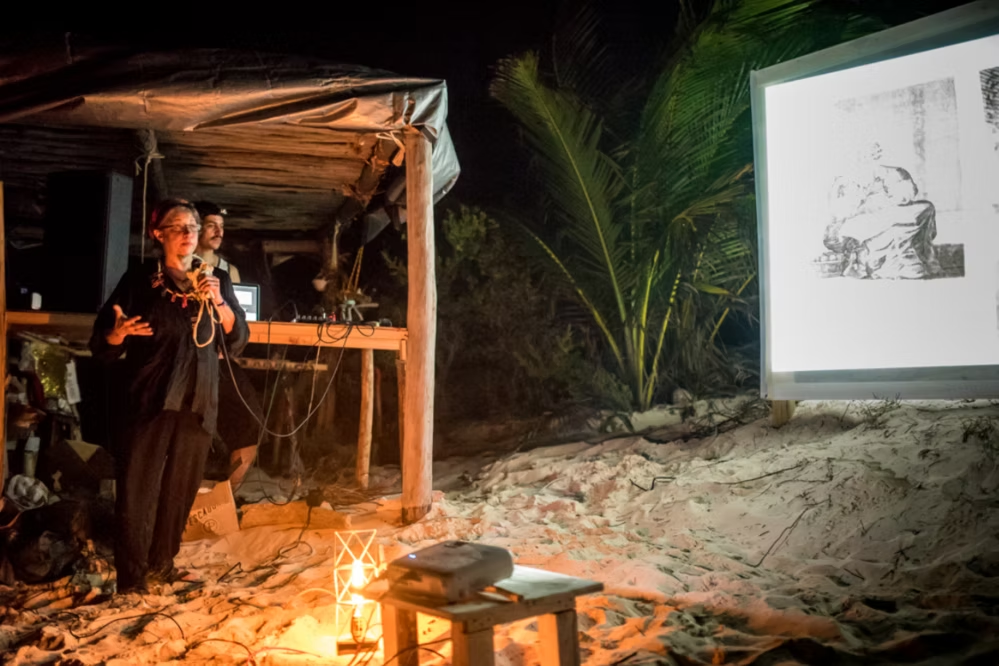
Robin Kahn (1961, based in New York City) was invited as a special guest because of her artivism and trajectory which continues to inspire emerging artists and women working in the arts.
She spoke about her Documenta 13 project where she invited women refugees from Western Sahara in order to raise social awareness of their impossible circumstances and at the same time to celebrate their strength and unique ability to organise themselves in complex social feministic structures, which allow them to survive.
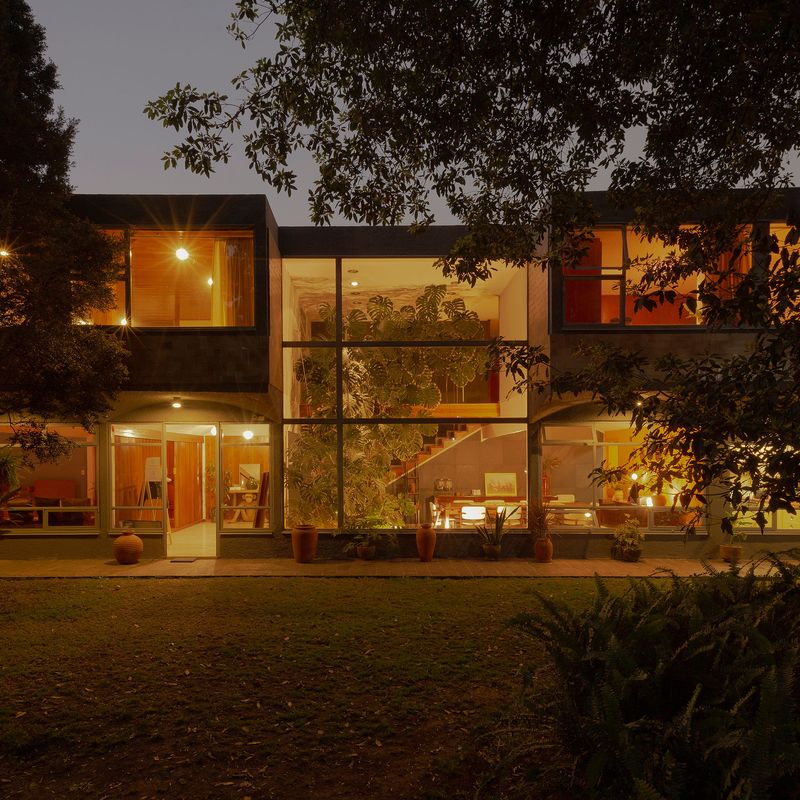
AKI AORA & Casa Snowapple will participate in Hotel Maria Kapel's 2027 Rotatings AiRs as a collaborating space.


.avif)








Throughout the past decade of art production,
AKI AORA counts 5 Editions, resulting in 20 works by 30 artists from 10 countries.